Managing small spaces in rented apartments is one of the greatest challenges of modern urban living. When you feel like the walls of your home are closing in and visual clutter is constantly staring you down, the solution isn’t necessarily to move to a larger place or spend a fortune on renovations. Instead, the solution lies in designing “smart systems” that adapt to the flow of your daily life.
At ResetNest, we believe that every single square foot of your home can be utilized efficiently without drilling holes or buying expensive furniture. In this practical guide, we share five golden rules to reorganize your small space, making it visually spacious and mentally peaceful.
1. The “Zoning” System: Divide Single Rooms into Clear Functional Areas
In tiny apartments, room functions often overlap; a living room might double as a home office and a dining area. To prevent mental clutter, apply the concept of “Zoning” — dividing a single space into distinct functional zones.
Use area rugs, targeted lighting, or tall indoor plants to define boundaries. For example, placing a warm rug under your desk visually separates your work zone from the relaxation zone, giving your brain a clear signal to focus when you sit down and unwind when you step away.
2. Vertical Storage: Free the Floors and Utilize Your Walls
The most common mistake in tiny home layouts is placing low cabinets and heavy furniture on the floor. This constricts traffic flow and creates visual crowding. The rule of thumb is simple: when you run out of horizontal space, always look up.
Install tall shelving units that extend from the floor to the ceiling, hang over-the-door organizers, and invest in heavy-duty, renter-friendly wall hooks (like Command Hooks) that peel off cleanly. Lifting items off the floor gives any room an instant sense of breathing room.
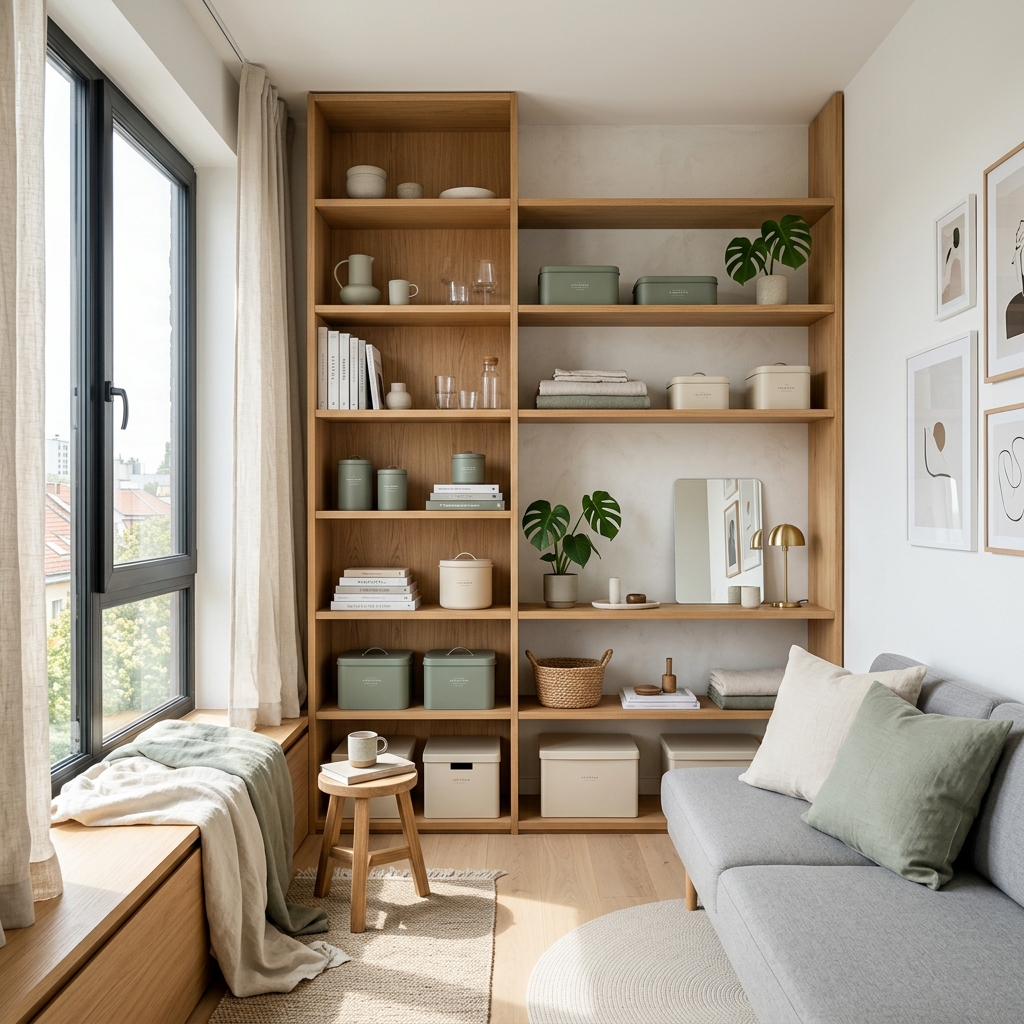
Utilizing vertical space offers immediate breathing room and floor clearance.
3. Double-Duty Furniture: Smart Storage for Renter Living
When square footage is scarce, every single piece of furniture must earn its keep by serving at least two purposes. Steer clear of bulky sofas or tables that offer zero storage capacity.
Opt for a coffee table with built-in hidden drawers, a hollow storage ottoman to tuck away extra blankets, or a platform bed frame with integrated under-bed storage drawers. Hidden storage is the ultimate secret behind homes that look minimal and tidy day after day.
4. The “Visual Cohesion” Tactic: Eliminate Color and Pattern Noise
Clutter isn’t just about physical objects; there is also “visual clutter.” Too many contrasting colors and tiny decorative items in a small area exhaust the eyes and make the space feel cramped.
Use unified storage bins, such as matching woven baskets or fabric storage cubes in warm, earthy neutrals (like cream, beige, and sage green). Grouping smaller loose items into uniform containers instantly eliminates color noise and restores a sense of peaceful aesthetic balance.
5. The Daily Reset Ritual: The 5-Minute Reset
Even the smartest systems won’t last without a daily maintenance habit. Tiny homes accumulate clutter at double the speed of larger homes.
Dedicate just five minutes at the end of each day to reset your space to its baseline. Return cups to the sink, fluff the sofa pillows, and put away loose mail. This small ritual ensures you wake up every morning to a clean slate, reducing daily stress and boosting your focus.
Start by adopting just one of these rules today, and watch how your small space transforms from a source of stress into a cozy, organized sanctuary.